
Inguinal hernia
The most common hernia. A personalised assessment identifies the best surgical approach: open, laparoscopic TAPP or robotic r-TAPP.
Symptoms
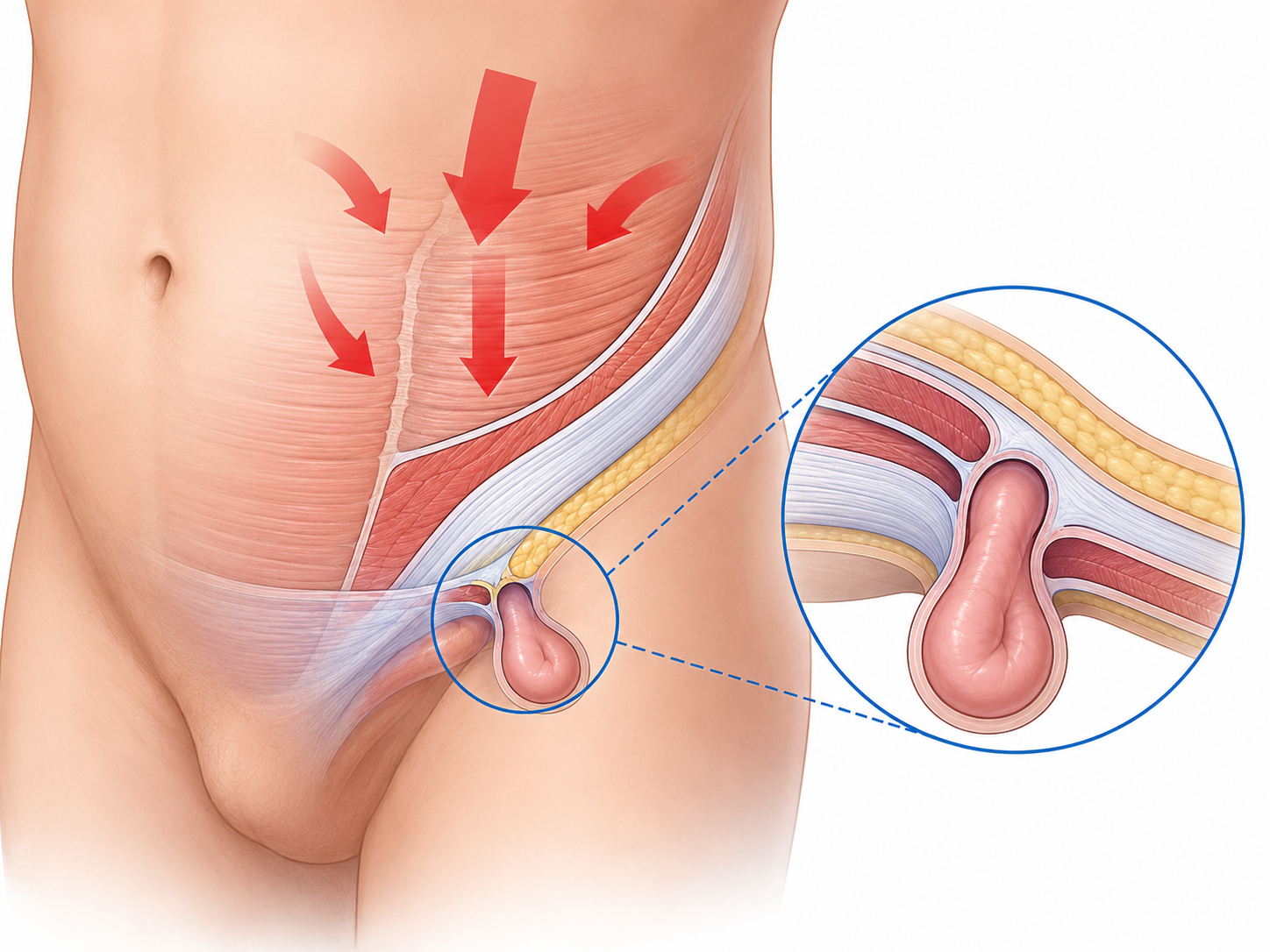
- Bulge in the groin
- Heaviness or tension in the groin
- Pain during exertion, coughing or sport
- Discomfort that increases after prolonged standing
- Burning or pulling sensation
- Pain radiating towards the pubis, scrotum or thigh
- Difficulty with sport or physical work


Risk factors
- Anatomical predisposition
- Congenital weakness of the groin wall
- Intense physical activity or weight lifting
- Chronic cough
- Constipation and straining
- Overweight
- Increased abdominal pressure
- Age-related tissue weakening
Differential diagnoses
- Sports hernia
- Lymphadenopathy
- Lipomas
- Muscle-tendon disorders
- Other pathological conditions
Diagnosis
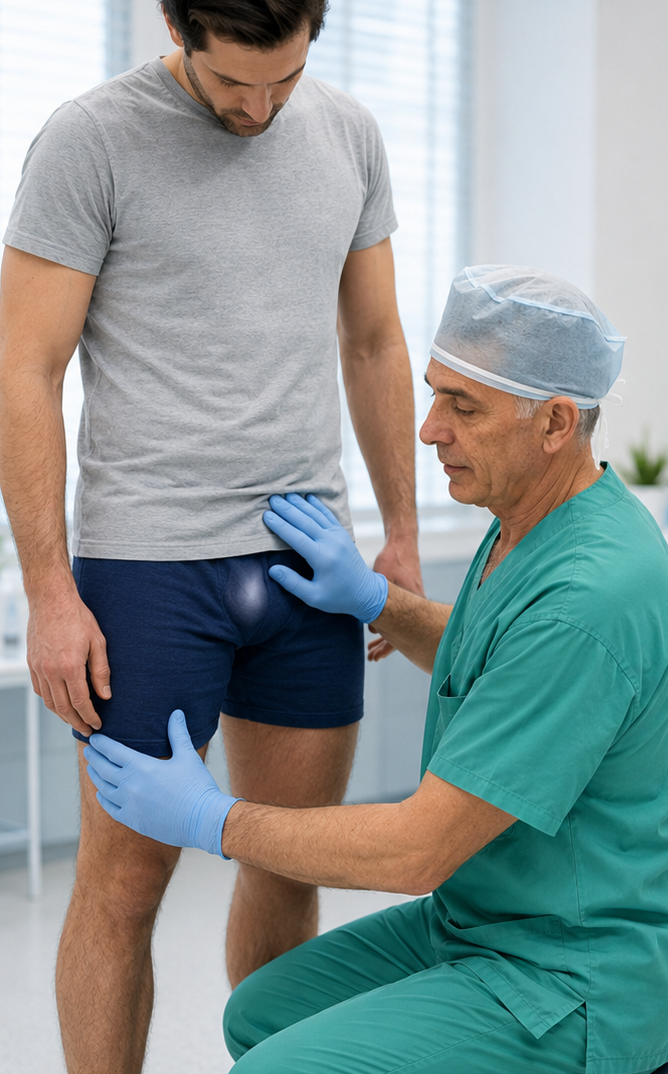
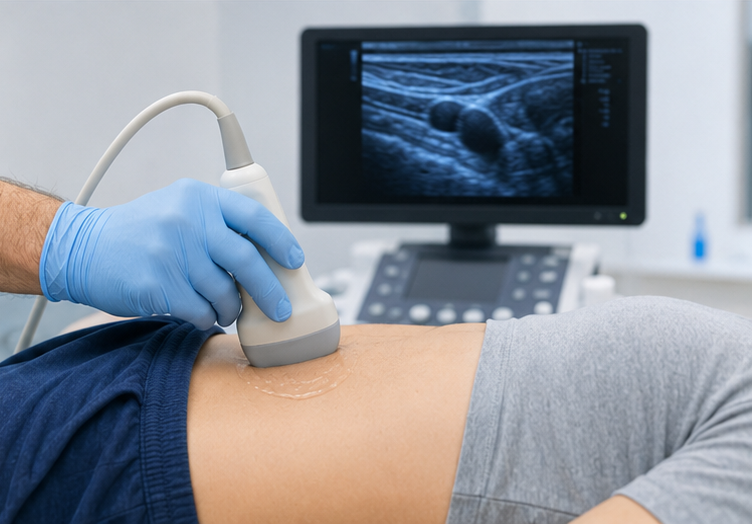
The diagnosis is mainly clinical. Dynamic ultrasound of the groin confirms the defect, its content and any bilateral or femoral component. CT is reserved for complex or recurrent cases.
Surgical approaches
Open repair
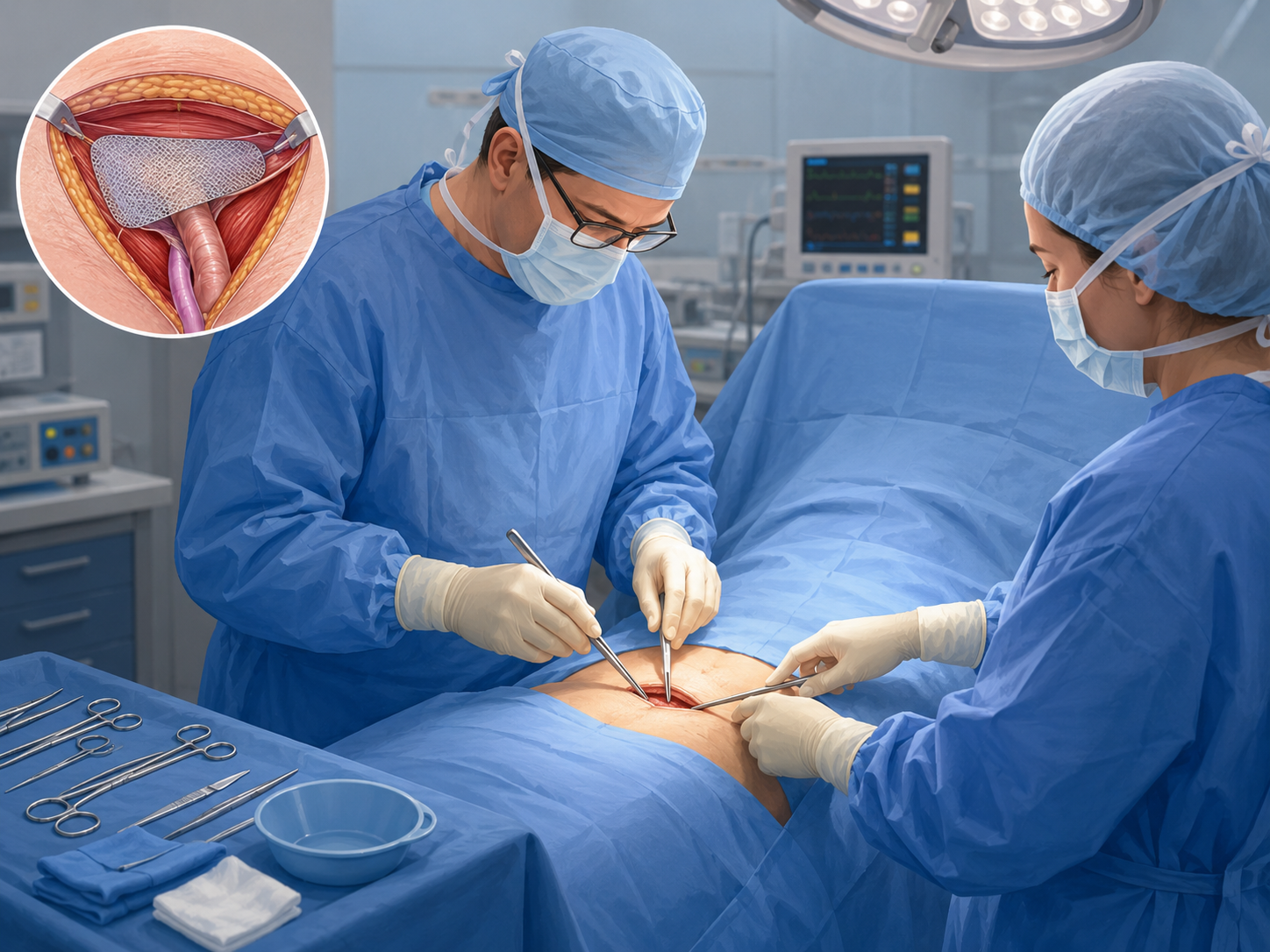
Direct access to the defect, mesh placement under local, regional or general anaesthesia. Suitable for many primary and some recurrent hernias.
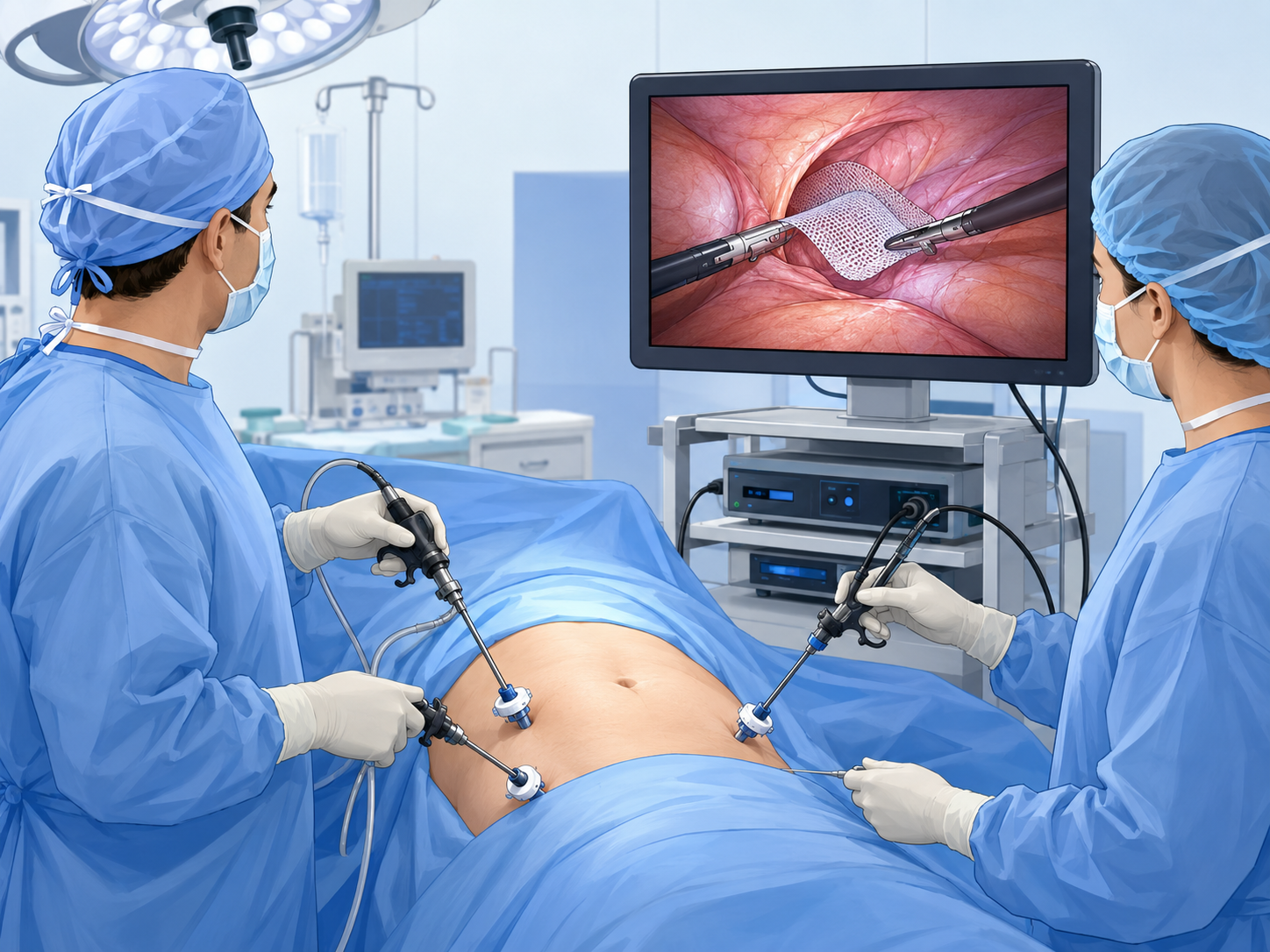
Laparoscopic TAPP
Keyhole repair from inside the abdomen, placing a mesh in the preperitoneal space. Ideal for bilateral, recurrent or femoral hernias.
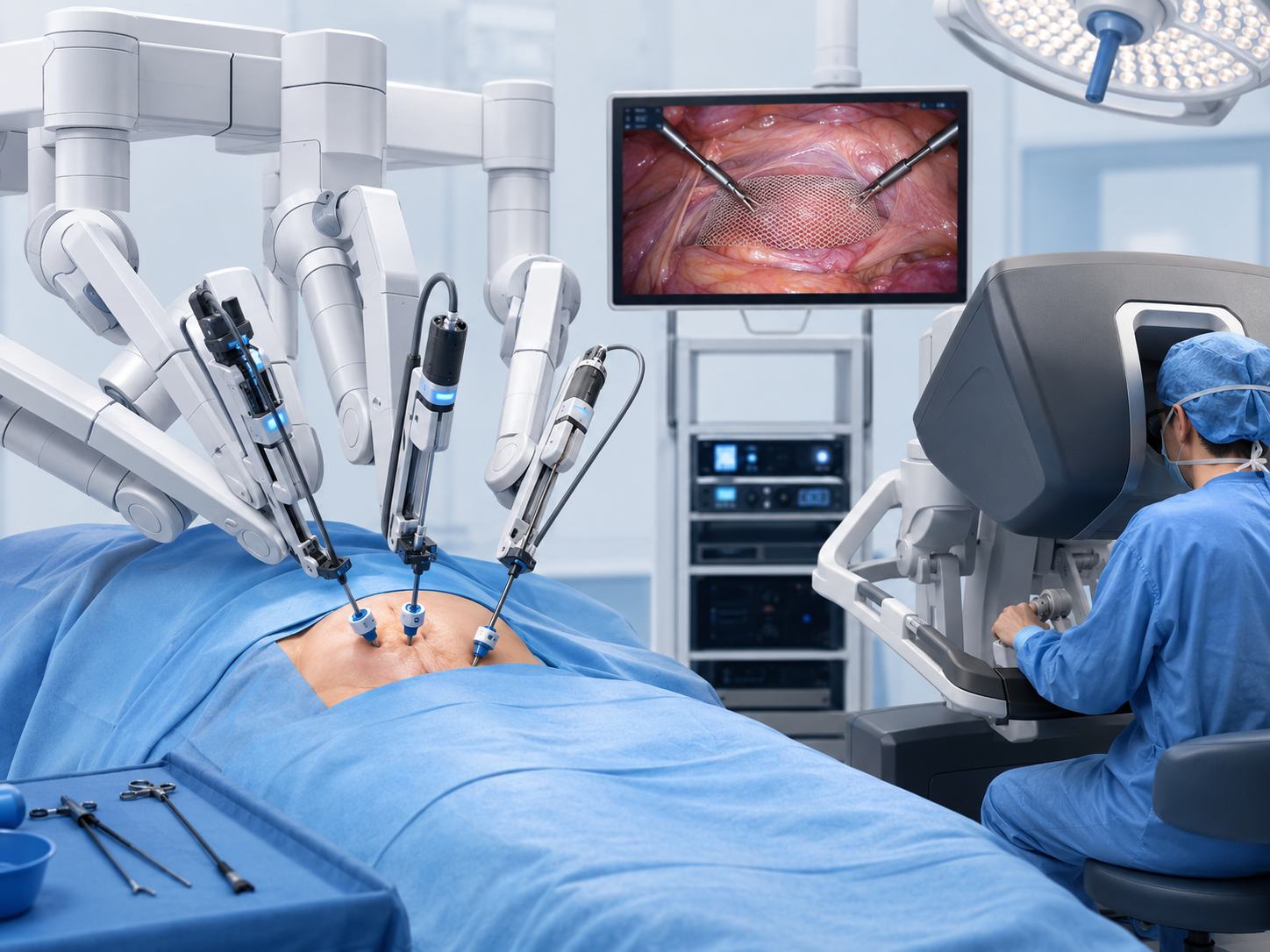
Robotic r-TAPP
Three-dimensional vision and articulated instruments for precise mesh placement and suturing in selected cases.
When to seek urgent care
Go to the emergency department if the hernia becomes hard, very painful, non-reducible, or is associated with nausea, vomiting, abdominal distension or fever.
Book a visit
A surgical consultation with ultrasound allows us to confirm the diagnosis, differentiate it from other conditions and plan the most appropriate repair.